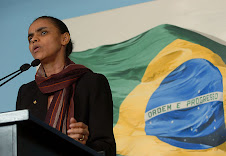
If you thought the U.S. election was interesting, take a look at Brazil.
“With the opportunity to try to construct this new future for Brazil and for the planet, I prefer to put my hopes in this movement.” Marina Silva
The Green Party of Brazil has a new voice, Senator Marina Silva. Female, black, born in the heart of the Amazon, and analphabetic until the age of 16, Marina is the heir of Chico Mendes in the struggle to preserve the forest.
Marina left the Worker's Party after 30 years and joined the Green Party last August to pursue a more sustainable economic development strategy.
"Ms. Silva resigned as environmental minister in 2008, after expressing concerns that the government might give in to pressure from business interests to ease off emergency measures she put in place to counteract a jump in Amazon deforestation. She returned to the national Senate, where she continued to press her environmental agenda". THE NEW YORK TIMES
Marina is standing as a candidate for the presidency of Brazil in the 2010 elections. This has already unleashed a movement, called the 'Marina effect' by the media, which has led the government and opposition to rush to propose green public policies and intensified the struggle for leadership in sustainable development.
Marina brings new and important questions to the presidential election process, giving voice to social and environmental movements who believe in a Brazil which is socially just, economically prosperous, culturally diverse and politically democratic.
The ‘Marina factor' is already reflected in the polling for the presidential race in Brazil. Even without the same space in the media as the Lula government and Governor Jose Serra, Marina is attracting 9.5% of the vote eight months before the election which will be held in October.
In the light of the new political landscape which the Green Party and Marina Silva are building in Brazil, we have to recognize that the green movement is becoming a strong new force, not only in Brazil but in Latin America generally.
segunda-feira, 29 de março de 2010

'Avatar' entra en la campaña brasileña
El Pais
La candidata del Partido Verde a la presidencia de Brasil, la ecologista Marina Silva, está buscando el apoyo del cineasta James Cameron, ganador de tres oscars con su película Avatar. Ambos podrían encontrarse el próximo 27 de marzo, día en que participarán, junto al ex vicepresidente de EE UU Al Gore y el ecologista Thomas Lovejoy, en el Foro Internacional sobre Sostenibilidad que tendrá lugar en Manaos, capital de la Amazonia brasileña.
Marina Silva está desarrollando su campaña en Internet, donde dialoga sobre todo con los jóvenes, más receptivos a los temas ecológicos. Después de haber visto el filme de Cameron, escribió en su blog personal (minhamarina.org.br): "Avatar es el síndrome del invasor". La ecologista, ex ministra de Medio Ambiente del primer Gobierno de Luiz Inácio Lula da Silva, compara la selva del Estado de Acre, donde pasó su infancia recogiendo caucho de los árboles con sus padres muy pobres, con la historia de Na'vi, el pueblo de la selva creado por Cameron.
"Tuve un momento, viendo Avatar, en el que me llevé la mano a la frente para tocar la gota de agua sobre una hoja, tan bella y tan fresca, de la misma forma que hacía cuando iba por la selva donde me crié", escribe Silva. Para la candidata a las presidenciales ?en las que se enfrentará a la aspirante propuesta por Lula, Dilma Rousseff, en una especie de reedición de la lucha de David contra Goliat?, Avatar no sólo simboliza el enfrentamiento entre el bien y el mal, sino que también es un alegato "a favor de la belleza, de la invención, de la supervivencia de lógicas de vida que se apartan de la corriente hegemónica".
En su probable encuentro con Cameron, Marina Silva, que aprendió a leer y escribir siendo ya adolescente y acabó, con la ayuda de sus amigos, licenciándose en la universidad, le explicará que para ella el momento culminante de la película, que le hizo derramar lágrimas, es aquel en el que el árbol símbolo de la casa de la selva es abatido. Para ella, la caída de ese árbol es "la matriz de un sentimiento de revuelta", el mismo que ella pide a los jóvenes en defensa de la Tierra, de sus ríos y de sus bosques, especialmente en Brasil, un país que posee el 25% del agua potable del mundo y una de las mayores biodiversidades del planeta.
http://www.elpais.com/articulo/internacional/Avatar/entra/campana/brasilena/elpepuint/20100318elpepuint_1/Tes
La candidata del Partido Verde a la presidencia de Brasil, la ecologista Marina Silva, está buscando el apoyo del cineasta James Cameron, ganador de tres oscars con su película Avatar. Ambos podrían encontrarse el próximo 27 de marzo, día en que participarán, junto al ex vicepresidente de EE UU Al Gore y el ecologista Thomas Lovejoy, en el Foro Internacional sobre Sostenibilidad que tendrá lugar en Manaos, capital de la Amazonia brasileña.
Marina Silva está desarrollando su campaña en Internet, donde dialoga sobre todo con los jóvenes, más receptivos a los temas ecológicos. Después de haber visto el filme de Cameron, escribió en su blog personal (minhamarina.org.br): "Avatar es el síndrome del invasor". La ecologista, ex ministra de Medio Ambiente del primer Gobierno de Luiz Inácio Lula da Silva, compara la selva del Estado de Acre, donde pasó su infancia recogiendo caucho de los árboles con sus padres muy pobres, con la historia de Na'vi, el pueblo de la selva creado por Cameron.
"Tuve un momento, viendo Avatar, en el que me llevé la mano a la frente para tocar la gota de agua sobre una hoja, tan bella y tan fresca, de la misma forma que hacía cuando iba por la selva donde me crié", escribe Silva. Para la candidata a las presidenciales ?en las que se enfrentará a la aspirante propuesta por Lula, Dilma Rousseff, en una especie de reedición de la lucha de David contra Goliat?, Avatar no sólo simboliza el enfrentamiento entre el bien y el mal, sino que también es un alegato "a favor de la belleza, de la invención, de la supervivencia de lógicas de vida que se apartan de la corriente hegemónica".
En su probable encuentro con Cameron, Marina Silva, que aprendió a leer y escribir siendo ya adolescente y acabó, con la ayuda de sus amigos, licenciándose en la universidad, le explicará que para ella el momento culminante de la película, que le hizo derramar lágrimas, es aquel en el que el árbol símbolo de la casa de la selva es abatido. Para ella, la caída de ese árbol es "la matriz de un sentimiento de revuelta", el mismo que ella pide a los jóvenes en defensa de la Tierra, de sus ríos y de sus bosques, especialmente en Brasil, un país que posee el 25% del agua potable del mundo y una de las mayores biodiversidades del planeta.
http://www.elpais.com/articulo/internacional/Avatar/entra/campana/brasilena/elpepuint/20100318elpepuint_1/Tes
Los verdes brasileños presentan a Silva sin maquillaje electoral
Los verdes brasileños presentan a Silva sin maquillaje electoral
El jefe de imagen ha sido vital en las campañas presidenciales del país
Con un gesto inusual y por sorpresa, la candidata del Partido Verde de Brasil, Marina Silva, ha renunciado a tener un jefe de imagen ante los electores en su campaña para las presidenciales de octubre. Su candidatura se presenta como la mayor novedad de las elecciones, una especie de Obama brasileña, de la que Al Gore ha afirmado que el mundo la ama.
Su fuerza, dicen en el Partido Verde, que la presenta como candidata, se encuentra en su personalidad. De origen humilde, la acompaña una historia de heroína de la ecología; fue senadora y ministra de Medio Ambiente del primer Gabinete del actual presidente brasileño, Luiz Inácio Lula da Silva. Dejó el Gobierno por desavenencias en materia ambiental con la que va a ser su rival en las presidenciales, la ministra de la Casa Civil, Dilma Rousseff, candidata propuesta por Lula.
Su entorno ofrece una explicación para la decisión de rechazar al jefe de imagen (marqueteiro): la alergia de Silva al maquillaje físico se amplía también al maquillaje psicológico. "No queremos un jefe de imagen, porque no queremos que Marina pueda ser vendida como un producto", afirma el verde Alfredo Sirkis, uno de los coordinadores de la campaña. Y como Silva va a contar con poco tiempo de televisión gubernamental al ser apoyada sólo por el Partido Verde, en el que ingresó tras haber militado 30 años en el Partido de los Trabajadores (PT), sus seguidores insisten en transmitir la autenticidad y la integridad de su persona. Es una de las pocas personalidades políticas que no ha estado involucrada en ningún tipo de escándalo.
En Brasil, el jefe de imagen de un candidato se considera fundamental. La asesoría del marqueteiro cuesta millones a los partidos. Lula tuvo en 2002 la ayuda del más famoso y caro del país, Duda Mendoza. Mendoza transformó a Lula, un sindicalista barbudo, vociferante y mal vestido, en un personaje elegante, con trajes de grandes estilistas y corbatas de diseño. Consiguió que Lula se presentara ante empresarios y banqueros sin dar miedo, y también surtió efecto la recomendación —que él siguió— de que dijera que nunca había sido de izquierdas, sino sólo sindicalista.
La decisión del partido y de la candidata es a la vez arriesgada y de posibles efectos positivos en el electorado, cansado de políticos a los que a veces considera fruto más de sus jefes de imagen que de sus verdaderas personalidades. "Yo no necesito que me digan cómo tengo que sonreír ni abrazar a un niño", dice la ecologista.
http://www.elpais.com/articulo/internacional/verdes/brasilenos/presentan/Silva/maquillaje/electoral/elpepuint/20100324elpepuint_3/Tes
El jefe de imagen ha sido vital en las campañas presidenciales del país
Con un gesto inusual y por sorpresa, la candidata del Partido Verde de Brasil, Marina Silva, ha renunciado a tener un jefe de imagen ante los electores en su campaña para las presidenciales de octubre. Su candidatura se presenta como la mayor novedad de las elecciones, una especie de Obama brasileña, de la que Al Gore ha afirmado que el mundo la ama.
Su fuerza, dicen en el Partido Verde, que la presenta como candidata, se encuentra en su personalidad. De origen humilde, la acompaña una historia de heroína de la ecología; fue senadora y ministra de Medio Ambiente del primer Gabinete del actual presidente brasileño, Luiz Inácio Lula da Silva. Dejó el Gobierno por desavenencias en materia ambiental con la que va a ser su rival en las presidenciales, la ministra de la Casa Civil, Dilma Rousseff, candidata propuesta por Lula.
Su entorno ofrece una explicación para la decisión de rechazar al jefe de imagen (marqueteiro): la alergia de Silva al maquillaje físico se amplía también al maquillaje psicológico. "No queremos un jefe de imagen, porque no queremos que Marina pueda ser vendida como un producto", afirma el verde Alfredo Sirkis, uno de los coordinadores de la campaña. Y como Silva va a contar con poco tiempo de televisión gubernamental al ser apoyada sólo por el Partido Verde, en el que ingresó tras haber militado 30 años en el Partido de los Trabajadores (PT), sus seguidores insisten en transmitir la autenticidad y la integridad de su persona. Es una de las pocas personalidades políticas que no ha estado involucrada en ningún tipo de escándalo.
En Brasil, el jefe de imagen de un candidato se considera fundamental. La asesoría del marqueteiro cuesta millones a los partidos. Lula tuvo en 2002 la ayuda del más famoso y caro del país, Duda Mendoza. Mendoza transformó a Lula, un sindicalista barbudo, vociferante y mal vestido, en un personaje elegante, con trajes de grandes estilistas y corbatas de diseño. Consiguió que Lula se presentara ante empresarios y banqueros sin dar miedo, y también surtió efecto la recomendación —que él siguió— de que dijera que nunca había sido de izquierdas, sino sólo sindicalista.
La decisión del partido y de la candidata es a la vez arriesgada y de posibles efectos positivos en el electorado, cansado de políticos a los que a veces considera fruto más de sus jefes de imagen que de sus verdaderas personalidades. "Yo no necesito que me digan cómo tengo que sonreír ni abrazar a un niño", dice la ecologista.
http://www.elpais.com/articulo/internacional/verdes/brasilenos/presentan/Silva/maquillaje/electoral/elpepuint/20100324elpepuint_3/Tes
quinta-feira, 4 de março de 2010
Brazil’s Presidential Race Gets Interesting
Brazil’s Presidential Race Gets Interesting
If you thought the U.S. election was interesting, take a look at Brazil.
“With the opportunity to try to construct this new future for Brazil and for the planet, I prefer to put my hopes in this movement.”
Marina Silva
The Green Party of Brazil has a new voice, Senator Marina Silva. Female, black, born in the heart of the Amazon, and analphabetic until the age of 16, Marina is the heir of Chico Mendes in the struggle to preserve the forest.
Marina has left the Worker's Party after 30 years and joined the Green Party last August to pursue a more sustainable economic development strategy.
"Ms. Silva resigned as environmental minister in 2008, after expressing concerns that the government might give in to pressure from business interests to ease off emergency measures she put in place to counteract a jump in Amazon deforestation. She returned to the national Senate, where she continued to press her environmental agenda". The New York Times
Marina is standing as a candidate for the presidency of Brazil in the 2010 elections. This has already unleashed a movement, called the 'Marina effect' by the media, which has led the government and opposition to rush to propose green public policies and intensified the struggle for leadership in sustainable development.
Of course, because she is a black woman and very charismatic, the comparisons with Barack Obama have not taken long to arise. The obvious joke is that, while Democrats in the US had to select between an African American and a woman, Brazilians can get both in Ms. Silva.
In a presidential election which was restricted to the current government and opposition, both would compete to lead the race backwards. In this context, Marina brings new and important questions to the presidential election process, giving voice to social and environmental movements who believe in a Brazil which is socially just, economically prosperous, culturally diverse and politically democratic.
The ‘Marina factor' is already reflected in the polling for the presidential race in Brazil. Even without the same space in the media as the Lula government and Governor Jose Serra, Marina is attracting 9.5% of the vote eight months before the election which will be held in October.
In the light of the new political landscape which the Green Party and Marina Silva are building in Brazil, we have to recognize that the green movement is becoming a strong new force, not only in Brazil but in Latin America generally.
Roberta Moreno
Green Party -Brazil
If you thought the U.S. election was interesting, take a look at Brazil.
“With the opportunity to try to construct this new future for Brazil and for the planet, I prefer to put my hopes in this movement.”
Marina Silva
The Green Party of Brazil has a new voice, Senator Marina Silva. Female, black, born in the heart of the Amazon, and analphabetic until the age of 16, Marina is the heir of Chico Mendes in the struggle to preserve the forest.
Marina has left the Worker's Party after 30 years and joined the Green Party last August to pursue a more sustainable economic development strategy.
"Ms. Silva resigned as environmental minister in 2008, after expressing concerns that the government might give in to pressure from business interests to ease off emergency measures she put in place to counteract a jump in Amazon deforestation. She returned to the national Senate, where she continued to press her environmental agenda". The New York Times
Marina is standing as a candidate for the presidency of Brazil in the 2010 elections. This has already unleashed a movement, called the 'Marina effect' by the media, which has led the government and opposition to rush to propose green public policies and intensified the struggle for leadership in sustainable development.
Of course, because she is a black woman and very charismatic, the comparisons with Barack Obama have not taken long to arise. The obvious joke is that, while Democrats in the US had to select between an African American and a woman, Brazilians can get both in Ms. Silva.
In a presidential election which was restricted to the current government and opposition, both would compete to lead the race backwards. In this context, Marina brings new and important questions to the presidential election process, giving voice to social and environmental movements who believe in a Brazil which is socially just, economically prosperous, culturally diverse and politically democratic.
The ‘Marina factor' is already reflected in the polling for the presidential race in Brazil. Even without the same space in the media as the Lula government and Governor Jose Serra, Marina is attracting 9.5% of the vote eight months before the election which will be held in October.
In the light of the new political landscape which the Green Party and Marina Silva are building in Brazil, we have to recognize that the green movement is becoming a strong new force, not only in Brazil but in Latin America generally.
Roberta Moreno
Green Party -Brazil
segunda-feira, 7 de setembro de 2009
NYT: A Child of the Amazon Shakes Up a Nation’s Politics
FOR Marina Silva, life began in the heart of the Amazon. From the age of 11, she walked nine miles a day helping her father collect rubber from trees.
These days, as an icon in the environmental movement, she has dedicated her life to protecting that same rainforest.
Illiterate and seriously ill from hepatitis, Ms. Silva left her home when she was 16 and headed by bus to the city of Rio Branco seeking medical care and an education. There she learned how to read and write, graduated from college and became a teacher and a politician.
She worked closely with her friend Chico Mendes, the rubber tapper and environmental activist, before he was gunned down in 1988 by ranchers opposed to his activism. When Luiz Inácio Lula da Silva was elected Brazil’s president in 2002, he picked Ms. Silva to be his environmental minister, and on her watch Brazil devised a national plan to combat deforestation and created an indigenous reserve roughly the size of Texas.
Last week Ms. Silva shook up Brazilian politics by announcing that, after nearly three decades, she was leaving Mr. da Silva’s Workers’ Party to join the Green Party, where she is likely to be its candidate in next year’s presidential election.
Her story — that of a humble woman who overcame extreme poverty and illness to become a force in Brazilian politics — could prove an inspiration to Brazilians in their search for a president to replace the popular Mr. da Silva, himself a product of humble beginnings, political analysts said.
“Marina is a person that earned her own wings, and it is not surprising to discover that those who have wings can fly,” said Jorge Viana, the former governor of Acre, Ms. Silva’s home state.
Her candidacy would pit her against Dilma Rousseff, President da Silva’s chief of staff and his choice to succeed him. Political analysts say the two women have been at odds since 2003 over the country’s economic development policy, including energy projects that Ms. Silva has questioned for environmental reasons.
Ms. Silva has “shaken up the race, mixed up all the cards,” said David Fleischer, a political science professor at the University of Brasília.
If either woman wins, history will be made. Brazil has never had a woman as president. In addition, the country has never had a black president; Ms. Silva is black.
Ms. Silva resigned as environmental minister last year, after expressing concerns that the government might give in to pressure from business interests to ease off emergency measures she put in place to counteract a jump in Amazon deforestation. She returned to the national Senate, where she continued to press her environmental agenda.
IN an interview here, Ms. Silva, 51, said she grew frustrated with the internal struggle to persuade members of the Workers’ Party to pursue a more sustainable economic development strategy.
“With the opportunity to try to construct this new future for Brazil and for the planet, I prefer to put my hopes in this movement,” she said of her switch to the Green Party.
While many admire her, some political analysts say they believe that Ms. Silva’s past serious health problems could become a political liability in a presidential contest. Hepatitis, malaria and heavy metals contamination have caused her to be hospitalized for long stretches.
Concerns about Ms. Rousseff’s chemotherapy treatment for a melanoma have dogged her in recent months and led some supporters of Mr. da Silva to urge him to back a different candidate for his successor. Brazilians still remember the case of Tancredo Neves, a popular president-elect who became severely ill in 1985 and died before taking office.
Still, Ms. Silva has spent a lifetime proving doubters wrong.
BORN in Seringal Bagaço, a small community of rubber tappers in Acre, Ms. Silva was one of 11 children, three of whom died. The family’s nearest neighbor lived about an hour away on foot through the thick forest. Reaching Rio Branco, about 43 miles away, sometimes took a week during the rainy season, when the family car would get stuck in the muddy road, she said.
Disease was common in the Amazon, and it took its toll on her family. Her mother died when Ms. Silva was 11. Two younger sisters later died with measles and malaria.
At 11, she began working with her father as a rubber tapper. They would typically leave the house at 5 a.m. and return about 12 hours later. To increase the family’s productivity, her father would go to one area of the forest and she and her sisters to another.
To keep her from being robbed or tricked by rubber buyers, her father taught her simple mathematics at an early age, she said.
After Ms. Silva became ill with hepatitis, she resolved to head to Rio Branco to find treatment. She wanted to become a nun and study.
She enrolled in a course for illiterate adults, worked as a maid and soon finished primary school. During vacation breaks, she returned to her father’s home and helped him collect rubber.
She dropped her idea of becoming a nun and entered college, graduating at 26 with a history degree.
While at the university, she joined the Revolutionary Communist Party, a clandestine group working to oppose Brazil’s military dictatorship.
During that period, she met Mr. Mendes, a rubber tapper who organized workers to warn about the dangers of burning and clearing the forest and about the displacement of traditional Amazon communities.
Ms. Silva joined Mr. Mendes’s movement, which involved peaceful demonstrations, and it led her into politics. After being elected a town councilwoman in Rio Branco, she went on to become a state legislator and a federal senator.
With her staunch advocacy of the Amazon, Ms. Silva “was clearly the candidate of the Brazilian environmental movement,” said Steve Schwartzman, the director of tropical forest policy at Environmental Defense Fund in Washington and a longtime friend.
“Marina was part of the movement that made the Amazon and deforestation and the possibility of a different development model a national issue in Brazil in a way it had never been before,” he said.
Her advocacy won her acclaim from international environmental groups around the world, which say that clearing of the forest for Brazilian industries could be affecting global climate change. Although deforestation continues, the rate slowed significantly from 2004 to 2007.
But in May 2008 Ms. Silva resigned her position, blaming “stagnation” within the government on its environmental policy. She had become increasingly isolated in Mr. da Silva’s government over her criticism of some proposed hydroelectric dams and of genetically modified crops.
STILL, most of the policies she set in motion have continued, environmentalists said.
She credited Mr. da Silva, whom she considers a “living hero” along with Nelson Mandela and Barack Obama, for Brazil’s progress on protecting the environment. But she said the government must preserve the advances it had made.
“I was fortunate to achieve some things, but they were far short of what Brazil and the world needs us to do,” she said.
These days, as an icon in the environmental movement, she has dedicated her life to protecting that same rainforest.
Illiterate and seriously ill from hepatitis, Ms. Silva left her home when she was 16 and headed by bus to the city of Rio Branco seeking medical care and an education. There she learned how to read and write, graduated from college and became a teacher and a politician.
She worked closely with her friend Chico Mendes, the rubber tapper and environmental activist, before he was gunned down in 1988 by ranchers opposed to his activism. When Luiz Inácio Lula da Silva was elected Brazil’s president in 2002, he picked Ms. Silva to be his environmental minister, and on her watch Brazil devised a national plan to combat deforestation and created an indigenous reserve roughly the size of Texas.
Last week Ms. Silva shook up Brazilian politics by announcing that, after nearly three decades, she was leaving Mr. da Silva’s Workers’ Party to join the Green Party, where she is likely to be its candidate in next year’s presidential election.
Her story — that of a humble woman who overcame extreme poverty and illness to become a force in Brazilian politics — could prove an inspiration to Brazilians in their search for a president to replace the popular Mr. da Silva, himself a product of humble beginnings, political analysts said.
“Marina is a person that earned her own wings, and it is not surprising to discover that those who have wings can fly,” said Jorge Viana, the former governor of Acre, Ms. Silva’s home state.
Her candidacy would pit her against Dilma Rousseff, President da Silva’s chief of staff and his choice to succeed him. Political analysts say the two women have been at odds since 2003 over the country’s economic development policy, including energy projects that Ms. Silva has questioned for environmental reasons.
Ms. Silva has “shaken up the race, mixed up all the cards,” said David Fleischer, a political science professor at the University of Brasília.
If either woman wins, history will be made. Brazil has never had a woman as president. In addition, the country has never had a black president; Ms. Silva is black.
Ms. Silva resigned as environmental minister last year, after expressing concerns that the government might give in to pressure from business interests to ease off emergency measures she put in place to counteract a jump in Amazon deforestation. She returned to the national Senate, where she continued to press her environmental agenda.
IN an interview here, Ms. Silva, 51, said she grew frustrated with the internal struggle to persuade members of the Workers’ Party to pursue a more sustainable economic development strategy.
“With the opportunity to try to construct this new future for Brazil and for the planet, I prefer to put my hopes in this movement,” she said of her switch to the Green Party.
While many admire her, some political analysts say they believe that Ms. Silva’s past serious health problems could become a political liability in a presidential contest. Hepatitis, malaria and heavy metals contamination have caused her to be hospitalized for long stretches.
Concerns about Ms. Rousseff’s chemotherapy treatment for a melanoma have dogged her in recent months and led some supporters of Mr. da Silva to urge him to back a different candidate for his successor. Brazilians still remember the case of Tancredo Neves, a popular president-elect who became severely ill in 1985 and died before taking office.
Still, Ms. Silva has spent a lifetime proving doubters wrong.
BORN in Seringal Bagaço, a small community of rubber tappers in Acre, Ms. Silva was one of 11 children, three of whom died. The family’s nearest neighbor lived about an hour away on foot through the thick forest. Reaching Rio Branco, about 43 miles away, sometimes took a week during the rainy season, when the family car would get stuck in the muddy road, she said.
Disease was common in the Amazon, and it took its toll on her family. Her mother died when Ms. Silva was 11. Two younger sisters later died with measles and malaria.
At 11, she began working with her father as a rubber tapper. They would typically leave the house at 5 a.m. and return about 12 hours later. To increase the family’s productivity, her father would go to one area of the forest and she and her sisters to another.
To keep her from being robbed or tricked by rubber buyers, her father taught her simple mathematics at an early age, she said.
After Ms. Silva became ill with hepatitis, she resolved to head to Rio Branco to find treatment. She wanted to become a nun and study.
She enrolled in a course for illiterate adults, worked as a maid and soon finished primary school. During vacation breaks, she returned to her father’s home and helped him collect rubber.
She dropped her idea of becoming a nun and entered college, graduating at 26 with a history degree.
While at the university, she joined the Revolutionary Communist Party, a clandestine group working to oppose Brazil’s military dictatorship.
During that period, she met Mr. Mendes, a rubber tapper who organized workers to warn about the dangers of burning and clearing the forest and about the displacement of traditional Amazon communities.
Ms. Silva joined Mr. Mendes’s movement, which involved peaceful demonstrations, and it led her into politics. After being elected a town councilwoman in Rio Branco, she went on to become a state legislator and a federal senator.
With her staunch advocacy of the Amazon, Ms. Silva “was clearly the candidate of the Brazilian environmental movement,” said Steve Schwartzman, the director of tropical forest policy at Environmental Defense Fund in Washington and a longtime friend.
“Marina was part of the movement that made the Amazon and deforestation and the possibility of a different development model a national issue in Brazil in a way it had never been before,” he said.
Her advocacy won her acclaim from international environmental groups around the world, which say that clearing of the forest for Brazilian industries could be affecting global climate change. Although deforestation continues, the rate slowed significantly from 2004 to 2007.
But in May 2008 Ms. Silva resigned her position, blaming “stagnation” within the government on its environmental policy. She had become increasingly isolated in Mr. da Silva’s government over her criticism of some proposed hydroelectric dams and of genetically modified crops.
STILL, most of the policies she set in motion have continued, environmentalists said.
She credited Mr. da Silva, whom she considers a “living hero” along with Nelson Mandela and Barack Obama, for Brazil’s progress on protecting the environment. But she said the government must preserve the advances it had made.
“I was fortunate to achieve some things, but they were far short of what Brazil and the world needs us to do,” she said.
sexta-feira, 4 de setembro de 2009
Marina Silva joins the Brazilian Green Party promising defend sustainable development
Marina Silva joins to the Brazilian Green Party promising defend sustainable development
The Senator and former Brazilian Environment Minister Marina Silva, joined the Brazilian Green Party on Sunday (30) during a national meeting attended by over one thousand people in Sao Paulo, Brazil. Before a crowd of activists from all over Brazil who sings the slogans "urgent Brazil, Marina president (Brasil Urgente, Marina Presidente)," the senator signed the Green Party membership form saying she was honored by the invitation of the Brazilian Green Party and felt thrilled with the reception of militancy, but the senator declined to comment on his possible candidacy for president. "My decision will only be in 2010." Along with national leaders, Brazilians ministers, parliament members from the federal and state government, artists, intellectuals and the representative of the Greens in the European Parliament, Catherine Greeze, Marina Silva was keen to stress the importance of the issue of sustainability as a strategy for all parties and acknowledged that the Brazilian Green Party pioneered in Brazil in the introduction of environmental issues in discussions of public policy. The Senator, Marina Silva vowed to work for sustainable development of the Brazil and the protection of the environment, considering the economic and social variables. The senator also argued that the Brazilian Green Party to carry the banner of political ethics
The membership form of Marina Silva was accredited with the signatures of Elenira Mendes, the daughter of Chico Mendes, the rubber tapper leader killed in 1988, José Luiz Penna, national president of the Brazilian Green Party, Fernando Gabeira, a federal deputy (PV-RJ) and Eduardo Jorge Secretary of Green and the Environment of São Paulo. The Federal Congressman, Sarney Filho (PV-MA) explain that Marina Silva became one important member in the Brazilian political scene. "We are living a historic moment with the affiliation of the greatest expression of sustainability in Brazil" In the assessment of International Relations Secretary of the Brazilian Green Party, president of the FVHD and member of the Global Greens Steering Committee, Marco Antonio Mroz, the membership of Marina Silva is an opportunity to promote unity between the green parties in the world to build a policy proposal which puts Brazil in the XXI century. "We are a country of immense diversity, environmental and socio-cultural, which allows us to dialogue with all sectors and the arrival of Marina Silva will strengthen our alliances with all segments of society"
The Senator and former Brazilian Environment Minister Marina Silva, joined the Brazilian Green Party on Sunday (30) during a national meeting attended by over one thousand people in Sao Paulo, Brazil. Before a crowd of activists from all over Brazil who sings the slogans "urgent Brazil, Marina president (Brasil Urgente, Marina Presidente)," the senator signed the Green Party membership form saying she was honored by the invitation of the Brazilian Green Party and felt thrilled with the reception of militancy, but the senator declined to comment on his possible candidacy for president. "My decision will only be in 2010." Along with national leaders, Brazilians ministers, parliament members from the federal and state government, artists, intellectuals and the representative of the Greens in the European Parliament, Catherine Greeze, Marina Silva was keen to stress the importance of the issue of sustainability as a strategy for all parties and acknowledged that the Brazilian Green Party pioneered in Brazil in the introduction of environmental issues in discussions of public policy. The Senator, Marina Silva vowed to work for sustainable development of the Brazil and the protection of the environment, considering the economic and social variables. The senator also argued that the Brazilian Green Party to carry the banner of political ethics
The membership form of Marina Silva was accredited with the signatures of Elenira Mendes, the daughter of Chico Mendes, the rubber tapper leader killed in 1988, José Luiz Penna, national president of the Brazilian Green Party, Fernando Gabeira, a federal deputy (PV-RJ) and Eduardo Jorge Secretary of Green and the Environment of São Paulo. The Federal Congressman, Sarney Filho (PV-MA) explain that Marina Silva became one important member in the Brazilian political scene. "We are living a historic moment with the affiliation of the greatest expression of sustainability in Brazil" In the assessment of International Relations Secretary of the Brazilian Green Party, president of the FVHD and member of the Global Greens Steering Committee, Marco Antonio Mroz, the membership of Marina Silva is an opportunity to promote unity between the green parties in the world to build a policy proposal which puts Brazil in the XXI century. "We are a country of immense diversity, environmental and socio-cultural, which allows us to dialogue with all sectors and the arrival of Marina Silva will strengthen our alliances with all segments of society"
terça-feira, 25 de agosto de 2009
Marina Silva ou les ambitions présidentielles d'une enfant de l'Amazonie
Marina Silva ou les ambitions présidentielles d'une enfant de l'Amazonie
Après trente années de lutte au nom du Parti des travailleurs, en défense de l´environnement et de l´Amazonie où elle est née, Marina Silva ne baisse pas les bras
Annie Gasnier
Au nom de l'environnement, qu'elle défend avec ferveur depuis des années, l'ancienne ministre du président Lula a quitté le Parti des travailleurs au pouvoir. Elle espère être plus écoutée du Parti vert, où elle devrait entrer prochainement.Après trente années de lutte au nom du Parti des travailleurs, en défense de l´environnement et de l´Amazonie où elle est née, Marina Silva ne baisse pas les bras. Mais cette forte femme au physique fragile, respectée dans le monde entier pour son combat titanesque, vient de quitter le Parti des travailleurs (PT), « sa maison politique », pour une nouvelle aventure. Vraisemblablement au sein du petit Parti vert (PV), ce qui devrait être officialisé à la fin du mois d´août, pour devenir candidate à l´élection présidentielle d´octobre 2010.Dans sa lettre adressée au président du Parti des travailleurs, Marina Silva reste élégante et ne verse pas dans l´amertume. La sénatrice explique s'être sentie à l´étroit dans un parti au pouvoir où elle ne trouvait plus « les conditions politiques pour placer l´environnement au cœur des politiques publiques du gouvernement ». Marina Silva défend que « l´environnement ne devrait plus être un sujet périphérique, mais transversal », en concédant que ce n´est facile pour aucun gouvernement.Ministre, elle « avale des couleuvres »Pour avoir été, durant cinq ans et demi, la ministre de l´Environnement du Brésil, elle sait de quoi elle parle. En tant que fondatrice du PT en Amazonie, compagne de lutte du militant assassiné Chico Mendes, et amie du président Luiz Inacio Lula da Silva, sa nomination en 2003 avait parue naturelle. Ce choix semblait aussi envoyer un message à la communauté internationale, le PT proche des écologistes, défendant une nouvelle vision dans ce domaine.Mais le bilan de sa gestion a révélé les difficultés d´élever l´environnement au rang de priorité. La ministre dut « avaler beaucoup de couleuvres » aux dires des militants verts, comme la légalisation des OGM (Organismes génétiquement modifiés) et l'instauration de grands chantiers, routes et barrages hydroélectriques, en pleine forêt tropicale.Son aura n'en a pourtant pas souffert, et du Sénat, elle poursuit sa lutte, s'insurgeant récemment contre une loi dite « MP 458 » qui a légalisé, et donc privatisé, des millions d´hectares de terres publiques en Amazonie. Dans le premier sondage où elle apparaît, Marina Silva est seulement créditée de 3% des intentions de votes, mais tous les observateurs s'accordent à dire qu'elle va vite progresser. Et dans les allées du pouvoir, elle provoque déjà des craintes pour celle qui est la dauphine de Lula, Dilma Rousseff.Radicalement différentesTout oppose ces deux femmes à la longue expérience politique, et quand elles étaient ministres ensemble, elles défendaient des positions radicalement différentes. « Marina » était même présentée (et raillée par Lula) comme celle qui gênait l´ouverture des grands chantiers du Plan d´accélération de la croissance, dirigée par « Dilma », signant trop lentement les autorisations de conformité aux lois de l´environnement.Marina Silva risque de voler des voix à la probable candidate de Lula car elle est plus connue, plus populaire, plus sympathique que Dilma Rousseff. Et puis, elle a une histoire personnelle, digne de celle du président syndicaliste ouvrier.Née dans une plantation de caoutchouc, alphabétisée à l´adolescence, préparée au couvent avant de se convertir au militantisme écologique et politique, elle est entrée sur la scène politique nationale au Sénat, où elle est réélue depuis 15 ans.Le chemin qui s´ouvre devant Marina Silva ne manque pas d´embûches : le Parti vert compte peu d´élus mais d´illustres membres, comme le chanteur et ex-ministre de la Culture, Gilberto Gil, et il intègre la coalition gouvernementale, où son discours écologique apparaît peu.Cependant, la présence de Marina Silva est qualifiée « d´oxygénation » pour la campagne présidentielle à venir. Adversaire ou pas, elle va forcer les candidats pressentis : le gouverneur social démocrate José Serra, et la ministre Dilma Rousseff, à mettre du vert dans leur discours.
Après trente années de lutte au nom du Parti des travailleurs, en défense de l´environnement et de l´Amazonie où elle est née, Marina Silva ne baisse pas les bras
Annie Gasnier
Au nom de l'environnement, qu'elle défend avec ferveur depuis des années, l'ancienne ministre du président Lula a quitté le Parti des travailleurs au pouvoir. Elle espère être plus écoutée du Parti vert, où elle devrait entrer prochainement.Après trente années de lutte au nom du Parti des travailleurs, en défense de l´environnement et de l´Amazonie où elle est née, Marina Silva ne baisse pas les bras. Mais cette forte femme au physique fragile, respectée dans le monde entier pour son combat titanesque, vient de quitter le Parti des travailleurs (PT), « sa maison politique », pour une nouvelle aventure. Vraisemblablement au sein du petit Parti vert (PV), ce qui devrait être officialisé à la fin du mois d´août, pour devenir candidate à l´élection présidentielle d´octobre 2010.Dans sa lettre adressée au président du Parti des travailleurs, Marina Silva reste élégante et ne verse pas dans l´amertume. La sénatrice explique s'être sentie à l´étroit dans un parti au pouvoir où elle ne trouvait plus « les conditions politiques pour placer l´environnement au cœur des politiques publiques du gouvernement ». Marina Silva défend que « l´environnement ne devrait plus être un sujet périphérique, mais transversal », en concédant que ce n´est facile pour aucun gouvernement.Ministre, elle « avale des couleuvres »Pour avoir été, durant cinq ans et demi, la ministre de l´Environnement du Brésil, elle sait de quoi elle parle. En tant que fondatrice du PT en Amazonie, compagne de lutte du militant assassiné Chico Mendes, et amie du président Luiz Inacio Lula da Silva, sa nomination en 2003 avait parue naturelle. Ce choix semblait aussi envoyer un message à la communauté internationale, le PT proche des écologistes, défendant une nouvelle vision dans ce domaine.Mais le bilan de sa gestion a révélé les difficultés d´élever l´environnement au rang de priorité. La ministre dut « avaler beaucoup de couleuvres » aux dires des militants verts, comme la légalisation des OGM (Organismes génétiquement modifiés) et l'instauration de grands chantiers, routes et barrages hydroélectriques, en pleine forêt tropicale.Son aura n'en a pourtant pas souffert, et du Sénat, elle poursuit sa lutte, s'insurgeant récemment contre une loi dite « MP 458 » qui a légalisé, et donc privatisé, des millions d´hectares de terres publiques en Amazonie. Dans le premier sondage où elle apparaît, Marina Silva est seulement créditée de 3% des intentions de votes, mais tous les observateurs s'accordent à dire qu'elle va vite progresser. Et dans les allées du pouvoir, elle provoque déjà des craintes pour celle qui est la dauphine de Lula, Dilma Rousseff.Radicalement différentesTout oppose ces deux femmes à la longue expérience politique, et quand elles étaient ministres ensemble, elles défendaient des positions radicalement différentes. « Marina » était même présentée (et raillée par Lula) comme celle qui gênait l´ouverture des grands chantiers du Plan d´accélération de la croissance, dirigée par « Dilma », signant trop lentement les autorisations de conformité aux lois de l´environnement.Marina Silva risque de voler des voix à la probable candidate de Lula car elle est plus connue, plus populaire, plus sympathique que Dilma Rousseff. Et puis, elle a une histoire personnelle, digne de celle du président syndicaliste ouvrier.Née dans une plantation de caoutchouc, alphabétisée à l´adolescence, préparée au couvent avant de se convertir au militantisme écologique et politique, elle est entrée sur la scène politique nationale au Sénat, où elle est réélue depuis 15 ans.Le chemin qui s´ouvre devant Marina Silva ne manque pas d´embûches : le Parti vert compte peu d´élus mais d´illustres membres, comme le chanteur et ex-ministre de la Culture, Gilberto Gil, et il intègre la coalition gouvernementale, où son discours écologique apparaît peu.Cependant, la présence de Marina Silva est qualifiée « d´oxygénation » pour la campagne présidentielle à venir. Adversaire ou pas, elle va forcer les candidats pressentis : le gouverneur social démocrate José Serra, et la ministre Dilma Rousseff, à mettre du vert dans leur discours.
Assinar:
Postagens (Atom)